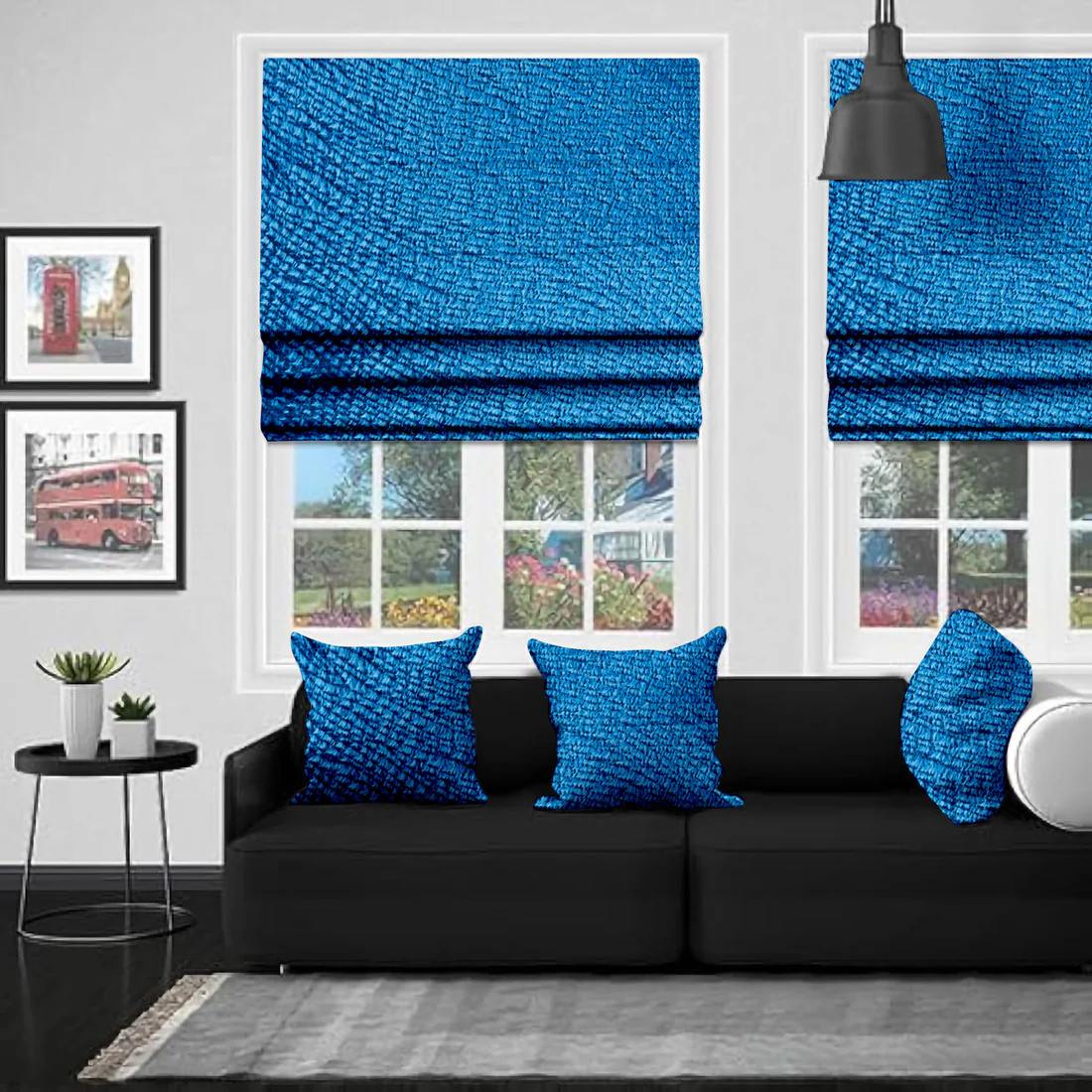
Bring rich colour and refined style into your home with the Mersin Marine Roman Blind, originally offered by Blinds Artist. With its striking marine-blue shade and delicately textured fabric, this blind introduces depth, serenity, and a modern finish that works beautifully in any room.
The Marine shade is inspired by the deep tones of the ocean, giving your dΓ©cor a cool and confident character. It brings balance to both minimalist and vibrant spaces, whether you are updating a sleek living room, creating a restful bedroom, or adding a bold feature to a home office. This Roman blind expresses strength, calmness, and elegance all at once.
Made with carefully selected materials, the Mersin Marine Roman Blind is designed to combine practicality with style. The classic Roman fold forms smooth, neat pleats when raised and flows into a seamless drape when lowered, bringing a sense of luxury with each use. The easy-to-handle mechanism lets you adjust light and privacy simply and reliably.
€ 109.50
Tools you will need for measuring your blinds:
Tips for accurate measurements:
Outside Recess
Measure the full size of the area you want the blind to cover. To reduce light entering around the edges, allow at least 70mm overlap at the top and 50mm on each side. The amount of overlap at the bottom is up to you, but remember to check for any obstacles such as radiators. Always use a steel tape measure, as cloth ones can stretch or bend and may give incorrect results.
Inside Recess
For blinds fitted inside the recess, measure the exact width and height of the opening. Take three measurements for both width and drop, then use the smallest figures. Do not make your own reductions, as these will be made for you to ensure the blind fits perfectly. Again, use a metal tape for accuracy.

When fitting your vertical blind, ensure the following parts are included:
Face Fix
Position the brackets around 5cm from each end of where the headrail will be placed. If more than two brackets are included, spread the extra ones evenly across the blindβs width. Make sure the fixings are right for the wall or surface. Hook the back of the headrail into the bracket, rotate it into place, and secure it by tightening the small screw at the front.
Top Fix
Mark and measure carefully, leaving enough room for handles or anything that sticks out into the recess. Position the brackets roughly 10cm from each end of the headrail area. If more than two brackets are provided, fit the extras at equal spacing. Always check the fixings are suitable for the surface. Tilt and hook the headrail into the bracket, rotate it until it clicks securely into place, and to remove it later, simply press the bracket to release the rail.